Breathing rhythm
Use a small chest, shoulder, or body shift instead of resizing the whole character.
Character idle animation
Create a subtle idle animation sheet that preserves your character's pose, scale, and personality between player inputs.
Subtle motion, stable silhouette
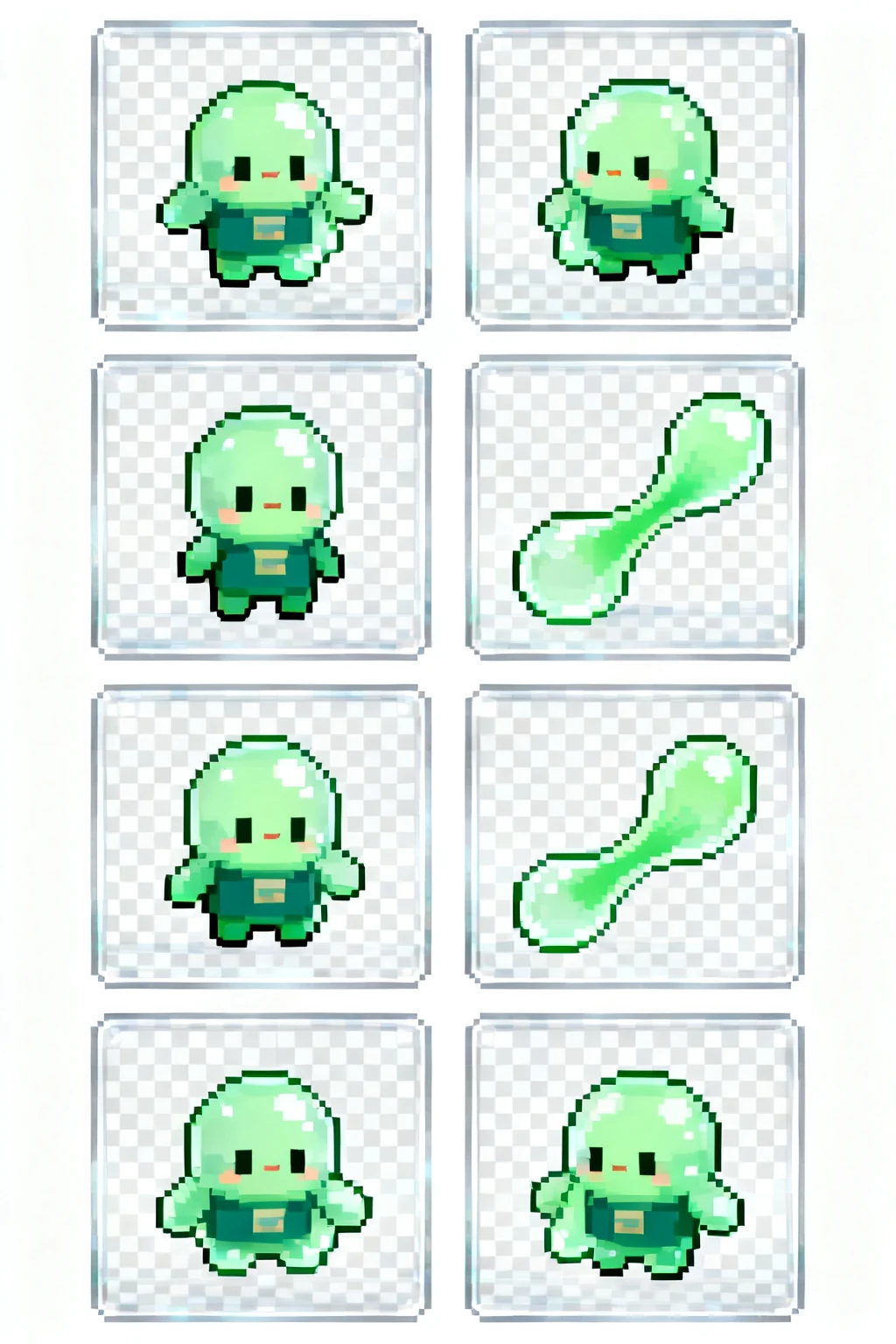
Use small shifts in breathing, weight, or accessories without making the character drift across the grid.
Use a small chest, shoulder, or body shift instead of resizing the whole character.
Let hair, cloth, ears, or equipment settle slightly after the main body moves.
The last pose should lead naturally into the first without a sudden snap or palette change.
Built for production-minded game makers
A practical workflow
Pick an action, direction, and art direction that match the character you want to animate.
Generate or refine the sheet, then inspect the grid for readable silhouettes and consistent timing.
Export the frames and follow your engine's sprite import settings for slicing and playback.
Start with the smallest loop that communicates the action. A readable walk can be short; attacks often need anticipation and recovery frames.
Yes. A consistent frame size and aligned character origin make slicing and collision setup much simpler in a game engine.
Check frame order, transparent background needs, grid dimensions, and whether the animation reads at your game's target size.